Microenterprise as a Commercial Revitalization Strategy
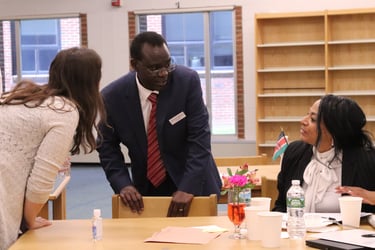
Recently, Bay Area LISC hosted a seminar on microenterprise as a tool for commercial revitalization. The event featured a presentation by Mihalio Temali fo the Neighborhood Development Center in St. Paul, MN. NDC has pioneered a place-based approach to microentreprise and small business development. They work with neighborhood residents to help start new businesses that often locate in neighborhood business districts. 25% of the businesses that they have assisted have located in formerly vacant commercial space. They have participated in the development of several incubator developments for small retail businesses. An outline of the presentation is below.
For more information on the Neighborhood Development Center see their web site at www.windndc.org.
Click here for additional Microenterprise Resource Links
The Neighborhood Development Center Model
Presented by Mihailo Temali, NDC Executive Director, and Bay Area LISC
Presentation Overview
A. Corridor revitalization strategies - "Main Street model"
1. business organizing
2. design
3. branding and promotion
4. economic "restructuring" - analysis and business attraction
5. safety
B. Common CDC tools and strategies beyond Main Street model
1. business lending (facade improvements, expansion, real estate, WC)
2. range of real estate development activities (such as land use planning, site control and RE development)
3. parking development
4. streetscape and public art projects
C. What microenterprise (ME) development adds:
1. define micro enterprise:
q 5 employees or less (common definition)
q annual sales under $100,000 (my definition)
2. build your community economy and corridor from within:
q overcome negative perceptions by outsiders
q give economic opportunity to local residents
3. great fit with corridor branding and promotional activities
4. great fit with CDC capabilities and resources
5. fill vacant storefronts and upper level offices
6. fill gaps in local goods and services
7. create community gathering places
8. create role models
9. generate community leaders
10. provide tenants for commercial development projects
D. Broad overview of the field of microenterprise development
1. international roots:
q called: "Village Banking," "Circle Lending," "Peer-group lending"
q history: "buffalo banks," Grammen Bank, ACCION and many others
q U.S. connection ACCION, FINCA, US AID, Hillary Clinton, etc.
q basic approach
-
usually oriented at women
-
group savings and record keeping
-
NGO provides initial loan to group - group provides to one member
-
group guarantees loan
-
when repaid, NGO provides larger loan - group provides to 2 or more members - this technique called "step lending"
-
little or no technical assistance or training provided - too costly
-
goals: broad impact and self-funding - high volume, high interest, high repayment rate
q now evolving more toward individual lending and some training
2. U.S. microenterprise development
q approximately 12 years old
q initially based on international model (de-emphasized training, many focused on women, utilized group lending and step loans)
q now incorporating more training and individual lending
q rarely connected to commercial corridor revitalization or neighborhood development
q AEO is main trade association; SBA and Mott are major funders; Aspen Institute is developer of best practices
E. Applying microenterprise development to commercial corridor revitalization
1. who to look for:
q residents with business ideas
q residents with home-based businesses (legal and "underground")
q streetcorner vendors
q small existing businesses on your corridor
2. consider conducting an "Asset Inventory" (ala ABCD Institute)
3. reach your ME's via your neighborhood networks and communications
4. connect to your "Economic Restructuring" efforts:
q target specific types of businesses (retail vs. service, ethnic restaurant vs. fast food chain, small vs. large, etc.)
q target specific types of entrepreneurs (local vs. not, specific ethnicity)
q connect to targeted properties
F. Tools
1. effective outreach to "underground" entrepreneur
2. training: business plans, operations, specialty topics
3. lending: start-up, stabilization, growth
4. technical assistance: general management, specialty topics
5. incubators: including mercados, farmers markets, suuques, kitchens, etc.
G. The Neighborhood Development Center model
1. Ten-year history
q Twin Cities CDC's traditional focus = affordable housing
q NEAR - corridor revitalization, barriers to corridor attraction
q Western Bank and WIND
q Summit-University Community Council survey
q changing demographics / new immigrant groups
2. Neighborhood Partners
q provide credibility and connections
q role - customize and control program, conduct outreach, host class and graduation, connect to commercial space
3. NDC Programs:
q Training:
16-week business plan class
BOP
WEB
q Lending:
-
micro loans
-
larger loans
-
Reba-Free financing
-
multi-bank loan funds
q Technical assistance:
q Business incubators:
4. Program Statistics (since 1993):
q trained: 1923
q alumni in business: 303
q number of Neighborhood Partners:
-
neighborhood groups: 14
-
ethnic organizations: 7
q alumni in business in each neighborhood: 1 - 39
q types of alumni businesses:
q average household income entering class: approx. $22,000 (50% AMI)
q alumni businesses by race:
-
African American - 34%
-
Caucasian - 28%
-
Latino - 24%
-
Asian American - 8%
-
Native American - 3%
q Lending:
-
141 borrowers
-
$2.8 M lent
-
19,902 average loan
-
loan portfolio performance:
-
Paid off loans: 30%
-
Written off loans: 13.5%
-
Loans in abeyance: 9%
-
Outstanding current loans: 33%
-
Other principle paid: 14%
q Technical assistance:
-
over 2000 hours per year of one-on-one TA
-
over 200 alumni received pro-bono legal assistance
-
over 20 alumni received reduced rate bookkeeping assistance
q Businesses located in NDC incubators: 85
5. Impact on commercial corridors:
q added many targeted businesses to storefronts:
-
Concord Street / St. Paul West Side: 9 Latino alumni businesses in storefronts
-
Lake Street / South Minneapolis: 47 Latino businesses in Mercado
-
Payne Avenue / St. Paul East Side: 13 alumni Latino businesses
-
Selby Avenue: 5 African American alumni businesses in storefronts
-
University and Dale: 20 African American and Hmong businesses
q generated many community gathering places:
q generated many community leaders and role models
H. Partners to consider:
1. banks: for direct lending and for loan and overhead funds (CDFI, CRA)
2. SBA
3. Small Business Development Centers
4. Small Business Information Centers
5. SCORE
6. City and state small business programs
7. local and national business development non-profits and schools
8. form a network of local CDC's
Click Here to Comment...
|